




Introduction
Learn how GPS satellites, timing signals and receivers work together to calculate a location on Earth.
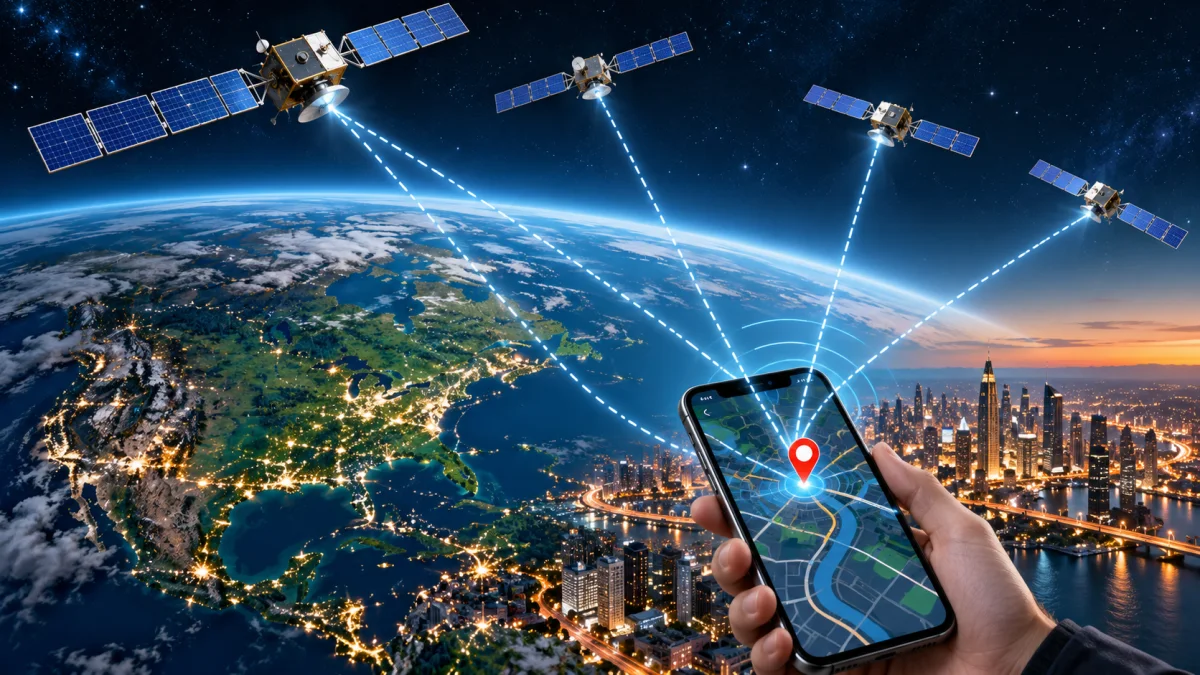
The Global Positioning System, commonly called GPS, is a satellite-based navigation system that helps receivers estimate location, speed, and time. A smartphone, car navigator, aircraft system, or surveying device can use signals from satellites and combine them with maps, sensors, Wi-Fi, and mobile networks to provide a practical location estimate.
For related updates, you can also check our latest jobs, scholarships, government schemes, and admissions pages for more opportunities.
Satellites and timing
GPS satellites broadcast signals that include precise time information and details about the satellites' orbits. A receiver compares the time a signal was sent with the time it was received. Because radio signals travel at a known speed, the difference gives an estimate of how far the receiver is from that satellite.
One distance measurement does not identify a single point because many locations may be the same distance from one satellite. With signals from multiple satellites, the receiver narrows the possibilities. In normal operation, a receiver needs signals from at least four satellites to calculate three-dimensional position and correct for a small timing error in its own clock.
Why phone location can vary
Buildings, mountains, trees, weather conditions in the upper atmosphere, reflected signals, satellite geometry, and interference can reduce accuracy. A phone may use GPS together with Wi-Fi networks, mobile towers, Bluetooth beacons, motion sensors, and a digital map to get a faster or more stable result, especially indoors.
GPS provides positioning information, not a guarantee that a road, address, or route is safe or current. Map data can be out of date, and a location pin may appear on the wrong side of a building or road. Drivers and pedestrians should pay attention to signs, local conditions, and human judgement rather than following a device blindly.
Privacy and responsible use
Location data can reveal routines, workplaces, homes, and visits. Review which apps can access location, choose the least permission needed, disable background access where appropriate, and understand whether a service stores or shares location history. A navigation benefit should be balanced with privacy and device-security choices.
The underlying idea is simple: satellites provide timed signals, the receiver measures signal travel time, and mathematics combines several measurements into a position. The result is powerful, but accuracy depends on the environment, equipment, and the quality of the data being used.
Note: This article is for general educational purposes. Follow official local guidance and qualified professional advice where safety or health is involved.
Sources: NASA Space Place: How does GPS work?
To stay updated with similar content, also visit our schemes, scholarships, jobs, and admissions pages for new opportunities and official updates.
FAQs
What is this article about?
This article explains the main details, timeline, and important updates related to How GPS Works: Satellites, Signals and Smartphone Location in a simple, reader-friendly format.
Where can I find more opportunities like this?
You can explore our dedicated jobs, scholarships, schemes, and admissions sections for similar updates, official notices, and recent opportunities.
How often is this page updated?
We refresh important articles whenever new announcements, corrections, or deadline changes become available so readers can stay informed.






Comments (0)
No Comments Found