




Quick Facts
Introduction
Pakistan has begun a nationwide polio campaign targeting 24 million children. Here is what the drive means and why worker security remains a concern.
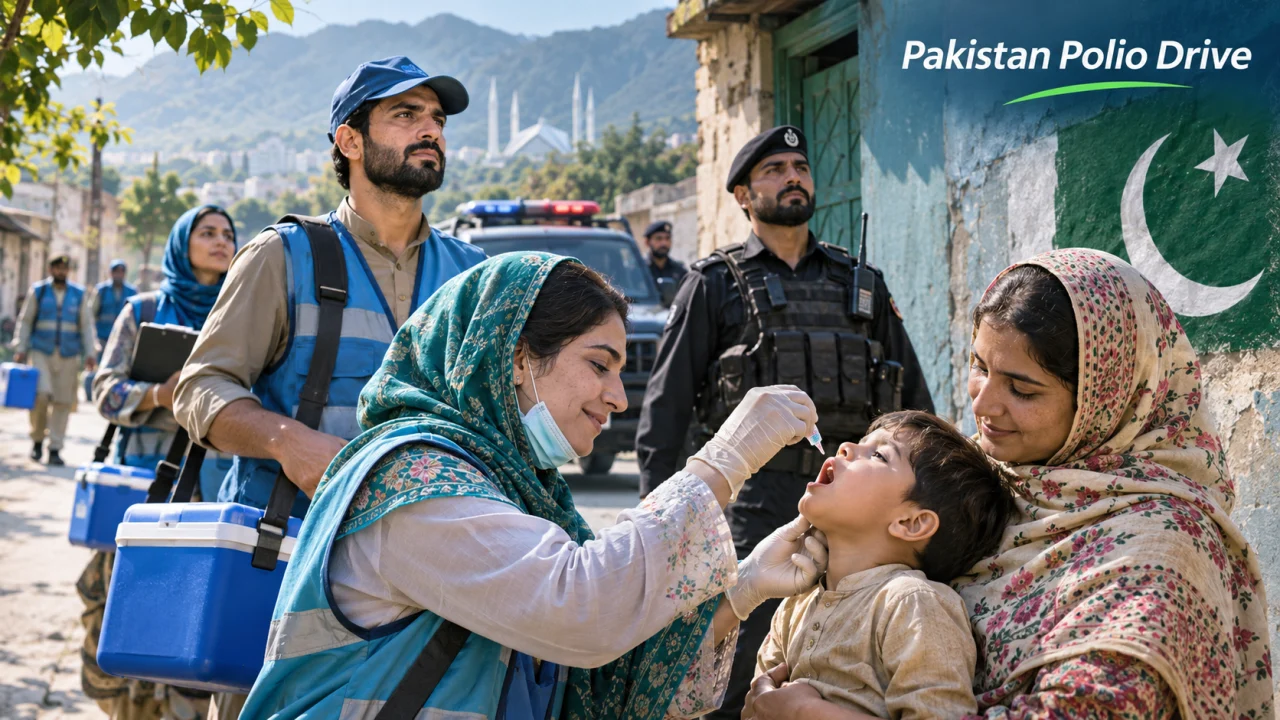
Pakistan’s nationwide polio vaccination campaign is drawing fresh attention after officials launched a drive aimed at protecting 24 million children. The campaign is part of the country’s continuing effort to stop transmission of wild poliovirus, with vaccination teams working door to door in multiple districts.
For related updates, explore Knowledge Base, Government Schemes, Scholarships and Tech News for more information.
The public-health effort has also highlighted the danger faced by frontline workers and the police assigned to protect them. The Associated Press reported that suspected militants killed two police officers in Mohmand while they were travelling to join a security detail for a polio team; another officer was injured. No group immediately claimed responsibility.
Why the Polio Drive Matters
Polio can cause permanent paralysis, but repeated vaccination gives children protection before they are exposed to the virus. Campaign teams visit homes because routine immunisation records do not always reach every child, especially in areas affected by displacement, difficult terrain or insecurity. Parents should cooperate with trained teams and ask local health authorities about the next scheduled visit if a child is missed.
| Key point | Current information |
|---|---|
| Campaign target | About 24 million children |
| Delivery method | Door-to-door vaccination teams |
| Security concern | Police escorts have faced attacks in Khyber Pakhtunkhwa |
| Public advice | Use official health teams and verify missed-child arrangements |
Safety, Trust and Accurate Information
Vaccine rumours can spread quickly during a campaign. Parents should rely on the Pakistan Polio Programme, provincial health departments, the World Health Organization and qualified medical professionals rather than forwarded voice notes. The oral polio vaccine used in campaigns is monitored through national and international public-health systems.
Security is a government responsibility, not a burden that should be placed on vaccinators. Attacks can interrupt campaigns and make families less willing to open their doors. Protecting health workers, improving route planning and responding to complaints transparently are all essential if Pakistan is to end endemic transmission.
For additional verified health coverage, visit Niazi TV’s Health & Wellness category.







Comments (0)
No Comments Found