




Quick Facts
Introduction
Learn how to build balanced meals with vegetables, fruit, whole grains, pulses and protein while reducing excess salt, sugar and unhealthy fats.
Healthy eating does not require expensive products, a strict diet or removing an entire food group for everyone. A balanced pattern is built from variety, adequacy, moderation and food safety. The ideal meal differs according to age, activity, culture, medical needs and available foods, but the basic principle is simple: choose mostly minimally processed foods and balance energy intake with the body needs.
For related updates, explore Knowledge Base, Government Schemes, Scholarships and Tech News for more information.
What to include in a balanced meal
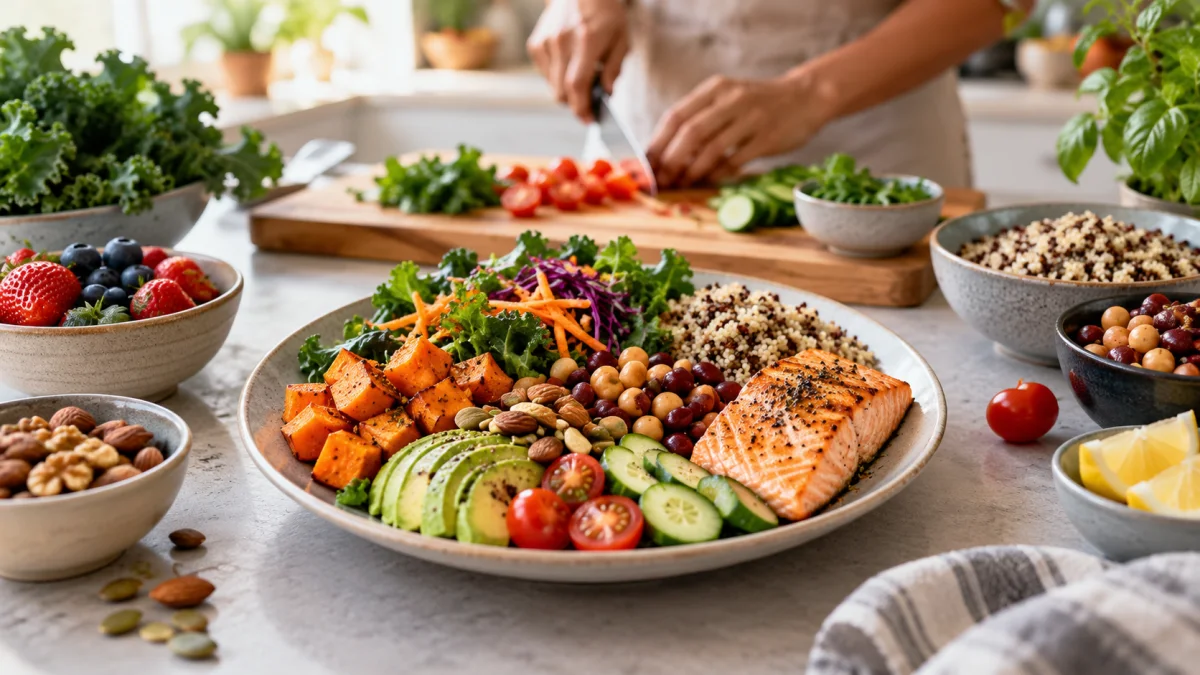
- Vegetables and fruit in a range of colours for fibre and important vitamins and minerals.
- Whole grains and other high-fibre carbohydrates such as oats, whole-wheat roti, brown rice, maize or other local staples.
- Pulses such as lentils, chickpeas, beans and peas, plus suitable sources of protein such as eggs, fish, dairy, poultry, nuts or seeds.
- Unsaturated fats from foods such as nuts, seeds, fish, avocado and suitable plant oils, used in sensible portions.
- Water as the main everyday drink, with sugary drinks and highly sweetened snacks kept occasional.
Reduce the ingredients that are easy to overconsume
Highly processed foods can be convenient, but many are high in salt, free sugars or unhealthy fats. Compare labels when available, cook with less salt, and choose fresh or minimally processed options more often. WHO advises adults to keep salt below 5 grams per day and free sugars below 10 percent of daily energy intake; individual needs and medical advice may differ.
Simple meal-planning ideas
- Plan two or three reliable meals that use affordable local ingredients.
- Keep washed fruit, vegetables, yoghurt, nuts or other practical choices available for snacks.
- Add beans, lentils or chickpeas to soups, curries, salads and rice dishes.
- Use steaming, baking, boiling or grilling more often than deep-frying.
- Read nutrition labels when possible and compare sodium, added sugar and saturated fat.
Supplements are not a shortcut
A supplement may be useful when a clinician identifies a deficiency or a life stage creates a specific need, but taking more is not automatically better. Some products interact with medicines or become harmful at high doses. Do not use supplements as a replacement for a varied diet or prescribed treatment, and ask a qualified professional before starting them.
Source: WHO: Healthy diet fact sheet
Source: WHO: Healthy diet topic page
Source: CDC: Preventing heart disease through healthy habits
Health notice: This article is for general education and does not replace advice from a qualified healthcare professional. Seek medical help for persistent, severe or emergency symptoms, and ask a clinician before making major changes if you have a medical condition, are pregnant, take medicines or are starting a new exercise plan.
Conclusion
Review the official sources, dates and eligibility conditions mentioned in this article before taking action. For more related updates, explore the category links above.
FAQs
What is this article about?
Learn how to build balanced meals with vegetables, fruit, whole grains, pulses and protein while reducing excess salt, sugar and unhealthy fats.
What topics are covered in this article?
This guide covers: What to include in a balanced meal, Reduce the ingredients that are easy to overconsume, Simple meal-planning ideas, Supplements are not a shortcut.
What should applicants check before applying?
Applicants should check eligibility, required documents, the closing date and the official application channel before submitting any information.
When was this article last updated?
This article was last updated on 18 October, 2026. Always verify deadline-sensitive information from the official source linked in the article.







Comments (0)
No Comments Found