




Introduction
Understand how earthquakes occur when faults slip, how seismic waves travel, and what people should know about earthquake preparedness.
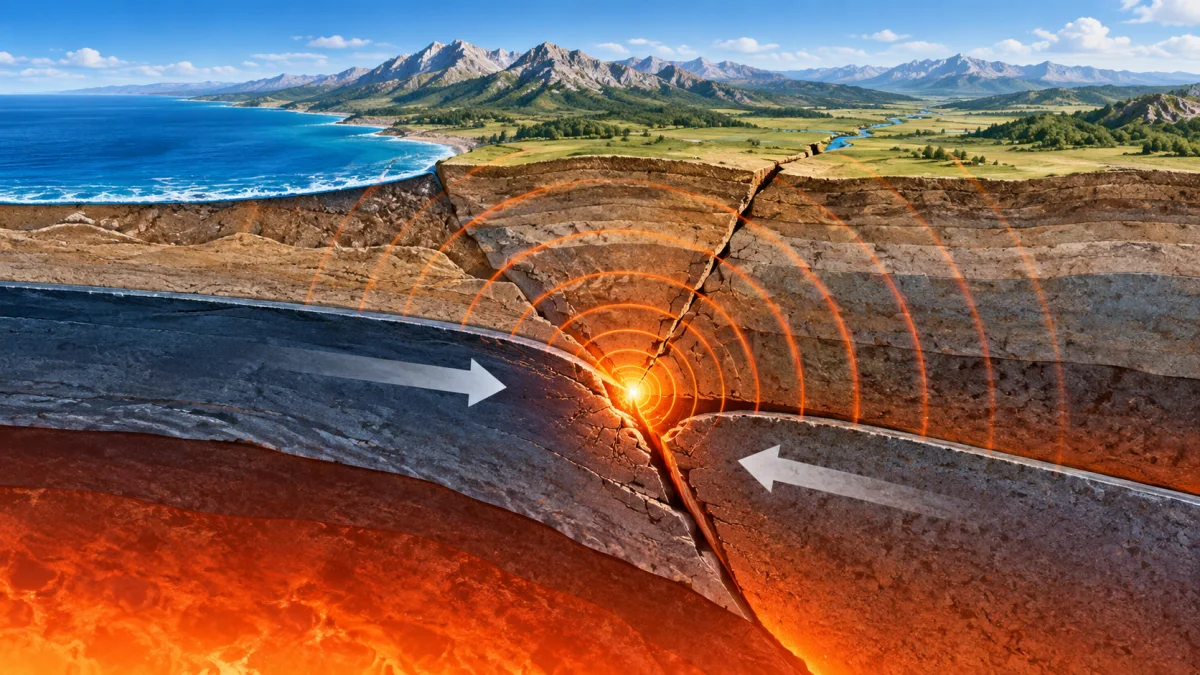
An earthquake is the shaking produced when energy is released suddenly inside the Earth. Most earthquakes happen when blocks of rock move along a fault. Tectonic plates are constantly moving, but friction can lock parts of a fault temporarily. Stress builds until the rocks slip, sending energy outward as seismic waves.
For related updates, you can also check our latest jobs, scholarships, government schemes, and admissions pages for more opportunities.
Focus, epicenter and seismic waves
The point inside the Earth where rupture begins is called the focus, or hypocenter. The point on the surface directly above it is the epicenter. Seismic waves travel from the rupture through the Earth and along the surface. Different waves move at different speeds and produce different types of ground motion.
Earthquake magnitude describes the size of the event at its source, while intensity describes how strongly the shaking is felt or how much damage occurs at a particular location. A large earthquake can feel different in different places because distance, depth, local soil, building quality, and construction practices all affect the experience.
Why damage varies
Buildings designed for local hazards can perform better because structural systems, foundations, connections, and non-structural elements are considered together. Loose or water-saturated soil can amplify shaking or contribute to liquefaction. Falling glass, furniture, electrical hazards, fires, landslides, and coastal tsunami risk may create danger in addition to the shaking itself.
Basic preparedness
People can prepare by securing heavy furniture, keeping emergency supplies, learning how to turn off utilities if instructed, and identifying safer places away from windows and objects that may fall. During strong shaking, official emergency agencies commonly advise people to drop, cover, and hold on where they are, then follow local instructions after the shaking stops.
After an earthquake, expect aftershocks and check for injuries without entering visibly damaged buildings. Avoid downed power lines, leaking gas, broken glass, and unsafe water. Use text messages when possible to reduce pressure on phone networks, and rely on official emergency information rather than rumours. Local guidance should always take priority because hazards differ by location.
Note: This article is for general educational purposes. Follow official local guidance and qualified professional advice where safety or health is involved.
Sources: U.S. Geological Survey: What is an earthquake and what causes them to happen?
To stay updated with similar content, also visit our schemes, scholarships, jobs, and admissions pages for new opportunities and official updates.
FAQs
What is this article about?
This article explains the main details, timeline, and important updates related to How Earthquakes Happen: Faults, Seismic Waves and Safety Basics in a simple, reader-friendly format.
Where can I find more opportunities like this?
You can explore our dedicated jobs, scholarships, schemes, and admissions sections for similar updates, official notices, and recent opportunities.
How often is this page updated?
We refresh important articles whenever new announcements, corrections, or deadline changes become available so readers can stay informed.






Comments (0)
No Comments Found