





Quick Facts
Introduction
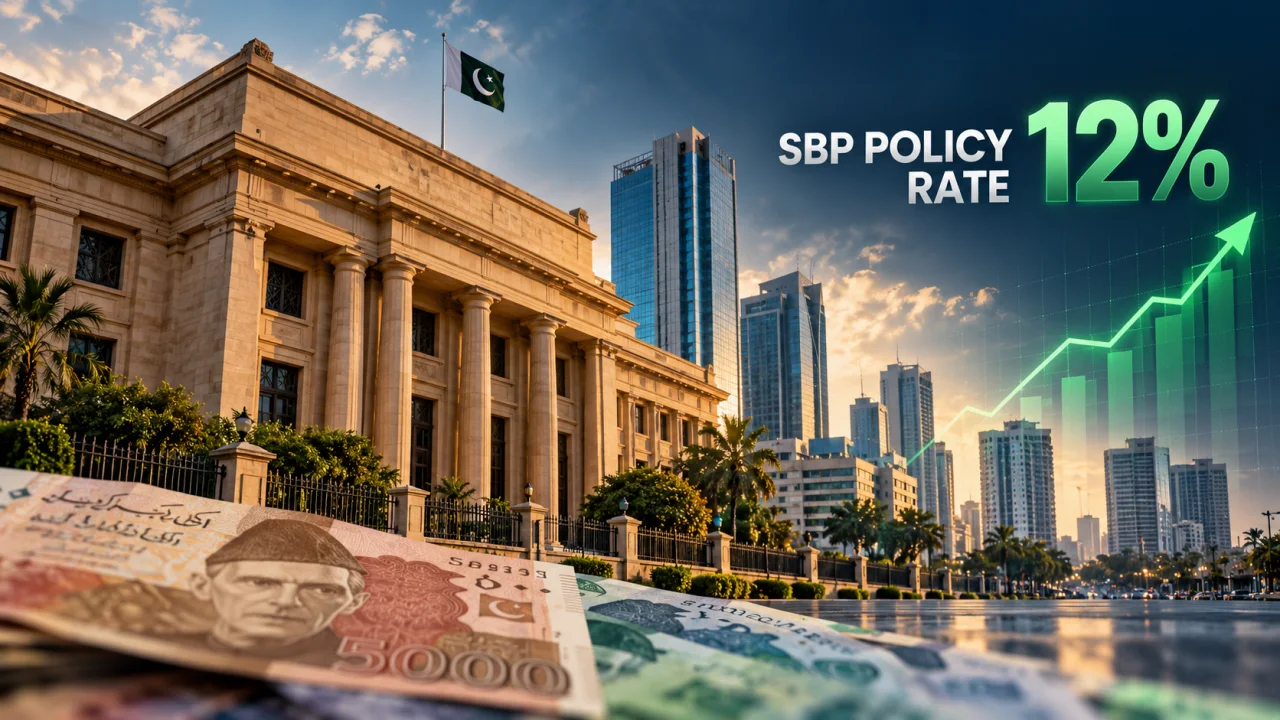
The State Bank of Pakistan has raised its policy rate by 50 basis points to 12%. Here is what the decision means for inflation, loans, savings and the rupee.
The State Bank of Pakistan has raised its benchmark policy rate by 50 basis points, taking it from 11.5% to 12%. The decision was announced on October 26, 2026, and is scheduled to take effect from October 27. It immediately became one of the most searched financial topics in Pakistan because policy-rate changes affect borrowing, savings, inflation expectations and business planning.
For related updates, explore Jobs, Scholarships, Government Schemes and Admissions for more information.
Key Points
- The policy rate increased by 0.5 percentage points to 12%.
- Nine of the ten Monetary Policy Committee members voted for the increase.
- The decision was linked to inflation risks, energy prices and regional uncertainty.
- The higher rate may make new borrowing more expensive while improving returns on some savings products.
Why Did the SBP Raise the Rate?
The Monetary Policy Committee said the inflation outlook had worsened. Higher energy costs and supply-side pressure can move through transport, electricity, food and imported goods. The central bank’s stated objective is to keep inflation expectations anchored and bring inflation back toward its target range.
The decision also reflects the difficult balance facing the economy. A higher interest rate can slow demand and reduce second-round inflation pressure, but it can also increase financing costs for companies and households.
Impact on Borrowers
People with floating-rate loans may see changes in future instalments or markup calculations, depending on the product’s terms. Businesses that use working-capital finance may face a higher cost of inventory, payroll and expansion. Home, auto and personal-finance applicants should ask lenders how quickly the new rate is passed through.
Existing borrowers should read their loan agreement rather than assuming every product changes on the same day. Some rates reset monthly, quarterly or at another agreed interval.
Impact on Savers and Investors
Higher rates can improve the return available from certain deposits, money-market instruments and government securities. The final return still depends on the product, tax treatment, maturity and the bank’s own pricing. Savers should compare net returns rather than focusing only on an advertised percentage.
What It Means for Inflation and the Rupee
The policy move may support the rupee by improving the relative return on rupee assets, but exchange rates also depend on reserves, imports, remittances, global oil prices and market confidence. It is not a guarantee that prices will fall immediately. Monetary policy works with a time lag.
Frequently Asked Questions
What is Pakistan’s new policy rate?
The SBP policy rate was raised to 12%, effective October 27, 2026.
Will bank loan instalments increase immediately?
Not necessarily. The timing depends on whether the loan is fixed or floating and on its reset terms.
Is the rate hike good for savers?
It may improve returns on some savings products, but customers should compare the net return, fees and tax treatment.
Conclusion
The SBP’s 12% policy rate is a response to renewed inflation and energy-price risks. For households, the practical priorities are checking loan terms, reviewing savings products and budgeting for possible changes in financing costs. The next inflation and exchange-rate data will show how effective the decision is.
Source: Dawn report on the SBP decision. See more Pakistan business updates.




Comments (0)
No Comments Found