





Quick Facts
Introduction
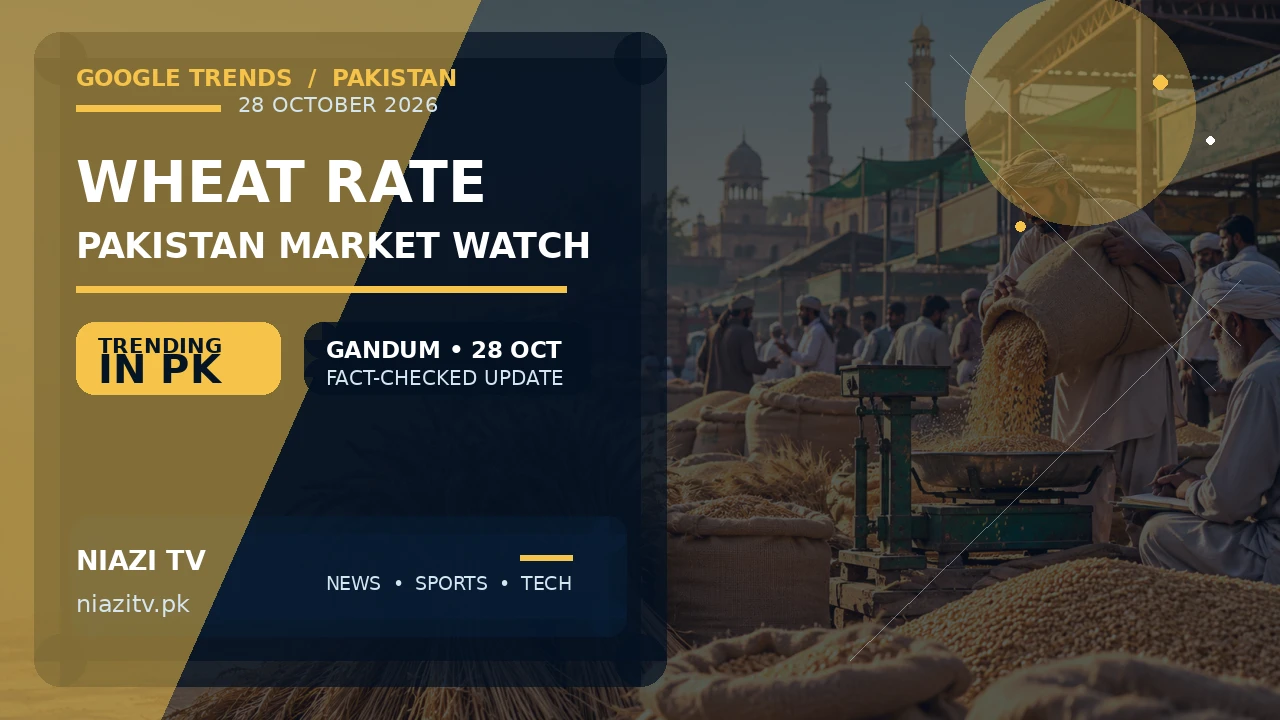
Wheat or gandum is trending in Pakistan. Check the October 28 market context, the government’s Rs4,500 per maund reference and why city rates differ.
“Gandum” was one of Pakistan’s most visible rising searches on October 28, 2026, reflecting public concern about wheat prices, household flour costs and the government’s procurement signals. The federal food ministry said the government had fixed a wheat price of Rs4,500 per maund after consulting the provinces, while open-market rates still vary by city and quality.
For related updates, explore Jobs, Scholarships, Government Schemes and Admissions for more information.
What the October Update Shows
- Federal authorities announced a Rs4,500-per-maund wheat reference.
- Market rates differ between wholesale mandis and retail shops.
- Freight, quality, moisture, milling and dealer margins affect the final quote.
- Consumers should not treat one city’s mandi rate as a national retail price.
Why Wheat Is Trending
Wheat is a daily-use staple, so even a small price change can affect flour, roti and bakery costs. Search interest grows when families hear about a government price, see a different local mandi quote or worry that supply conditions could change before the next harvest.
The federal food ministry’s announcement is a policy signal, but it does not erase the market differences created by transport and local supply. A farmer, miller, wholesaler and household may all quote a different number while discussing the same crop.
How to Read a Wheat Rate
First check the unit: a maund is commonly treated as 40 kilograms, while other reports use a 100-kilogram bag. Next check whether the number is a wholesale bid, a government release rate or a retail flour price. Finally, ask about grade and delivery location.
What It Means for Families and Farmers
Higher wheat prices can improve the return for growers but put pressure on consumers and flour mills. Lower prices can help households but may reduce incentives if production costs are rising. A stable supply therefore requires more than a single announcement: authorities need transparent procurement, timely releases and action against hoarding.
Conclusion
The wheat trend is a practical cost-of-living story. Pakistani readers should compare like-for-like units, use local market information and treat the official Rs4,500 reference as a policy update rather than a universal shop price.
Sources: Ministry of National Food Security and Research and Pakistan Bureau of Statistics price statistics.







Comments (0)
No Comments Found