





Quick Facts
Introduction
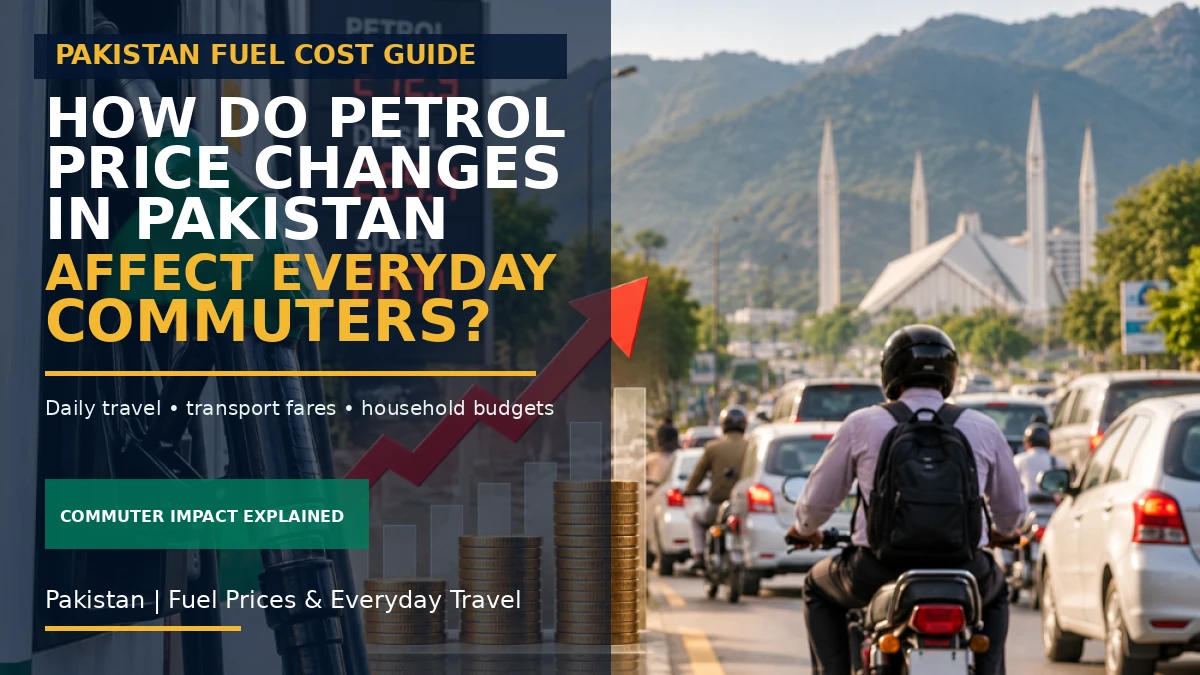
Learn how petrol price changes in Pakistan affect daily commuting costs, public transport fares, household budgets and everyday travel decisions.
How do petrol price changes in Pakistan affect everyday commuters?
For related updates, explore Jobs, Scholarships, Government Schemes and Admissions for more information.
This is an important question for people who travel daily for work, education, business, shopping or personal responsibilities. Even a small change in fuel prices can alter the amount a commuter spends on transportation each month.
Understanding why petrol prices change and how those changes move through the transport system can help people make better decisions about routes, travel options and household spending.
Why Do Petrol Prices Change in Pakistan?
Petrol prices in Pakistan are influenced by several factors. International crude oil prices, the exchange rate, government taxes, petroleum levies, import costs and official pricing decisions can all affect the final price paid at fuel stations.
When international oil prices rise, importing fuel can become more expensive. A change in the value of the Pakistani rupee against the US dollar may also increase or reduce import-related costs. Taxes and levies then influence how much of the overall cost is reflected in the retail price.
These factors do not always move in the same direction. As a result, petrol prices may rise, fall or remain stable depending on the combined economic and policy situation.
How Do Rising Petrol Prices Affect Daily Commuters?
For people who rely on motorcycles and cars, a higher petrol price means paying more for the same daily journey. A commuter travelling to work or college every day may see a noticeable increase in monthly fuel expenses, especially when the route is long or traffic causes frequent stops.
The effect can be more difficult for people with fixed incomes. When transportation takes up a larger portion of the monthly budget, less money may remain for groceries, education, healthcare and other essential needs.
Some commuters respond by sharing rides, using public transport, combining several errands into one trip or reducing unnecessary journeys. However, the practical choices available depend on the commuter’s location, work schedule, safety concerns and access to reliable transport.
Impact on Motorcyclists and Car Owners
Motorcycles generally use less fuel than cars, but riders who travel long distances can still feel the effect of repeated price changes. Daily fuel spending can become a significant monthly cost when a person travels from a nearby town to a city for employment or education.
Car owners may face a larger increase in rupee terms because of higher fuel consumption. Vehicle size, engine condition, tyre pressure, traffic congestion and driving style can all influence how much fuel is used during a routine trip.
How Do Petrol Price Changes Affect Public Transport?
Fuel is an operating expense for buses, vans, rickshaws and other transport services. When fuel costs increase, transport operators may face higher daily expenses. Depending on competition, route conditions, maintenance costs and local demand, some operators may review or adjust their fares.
The relationship is not always one-to-one. A petrol price increase does not automatically mean that every public transport fare will rise by the same amount. Local market conditions, passenger demand and the type of fuel used can also influence the final fare.
Effect on Delivery Costs and Household Expenses
Fuel price changes can affect businesses that depend on road transport to move products. Delivery companies, retailers, wholesalers and small businesses may face higher distribution expenses when fuel becomes more costly.
Consumers may eventually notice these pressures through delivery charges or changes in the prices of some goods. However, the effect varies by industry and depends on other costs such as wages, electricity, rent, supply availability and competition.
How Can Commuters Manage Changing Fuel Costs?
Commuters cannot control national or international fuel prices, but practical habits can help reduce unnecessary fuel use and make monthly expenses easier to manage.
- Plan efficient routes: Combine errands and choose routes that reduce unnecessary distance and repeated journeys.
- Maintain the vehicle: Keep tyres properly inflated, follow the service schedule and replace a dirty air filter when necessary.
- Drive smoothly: Avoid rapid acceleration, hard braking and unnecessary idling because these habits can increase fuel consumption.
- Track monthly expenses: Record fuel purchases to understand the real cost of commuting and identify changes in spending.
- Consider alternatives: Where practical and safe, share rides, use public transport or walk for short journeys.
Where Can You Check the Latest Petrol Prices in Pakistan?
Keeping track of fuel-price revisions can help commuters estimate upcoming travel expenses and review their monthly budgets. Instead of relying on outdated figures or unverified social media posts, readers should check a reliable fuel-price information source before making calculations.
For convenient access to current fuel-price information and related updates, visit Petrol Price Pakistan. Checking the latest available rate before planning a budget can make it easier to understand how a change in fuel costs may affect everyday travel.
Conclusion
Petrol price changes in Pakistan affect more than the amount paid at a fuel station. They can influence commuting expenses, public transport operations, delivery costs and the amount households spend on other needs.
The impact is different for every commuter. Travel distance, vehicle efficiency, income, local transport options and daily routines all matter. By monitoring fuel prices, maintaining vehicles, planning journeys and considering suitable alternatives, commuters can make more informed decisions and manage transportation expenses more effectively.
Conclusion
Review the official sources, dates and eligibility conditions mentioned in this article before taking action. For more related updates, explore the category links above.
FAQs
What is this article about?
Learn how petrol price changes in Pakistan affect daily commuting costs, public transport fares, household budgets and everyday travel decisions.
What topics are covered in this article?
This guide covers: Why Do Petrol Prices Change in Pakistan?, How Do Rising Petrol Prices Affect Daily Commuters?, Impact on Motorcyclists and Car Owners, How Do Petrol Price Changes Affect Public Transport?, Effect on Delivery Costs and Household Expenses.
What should applicants check before applying?
Applicants should check eligibility, required documents, the closing date and the official application channel before submitting any information.
When was this article last updated?
This article was last updated on 22 October, 2026. Always verify deadline-sensitive information from the official source linked in the article.





Comments (0)
No Comments Found