




Quick Facts
Introduction
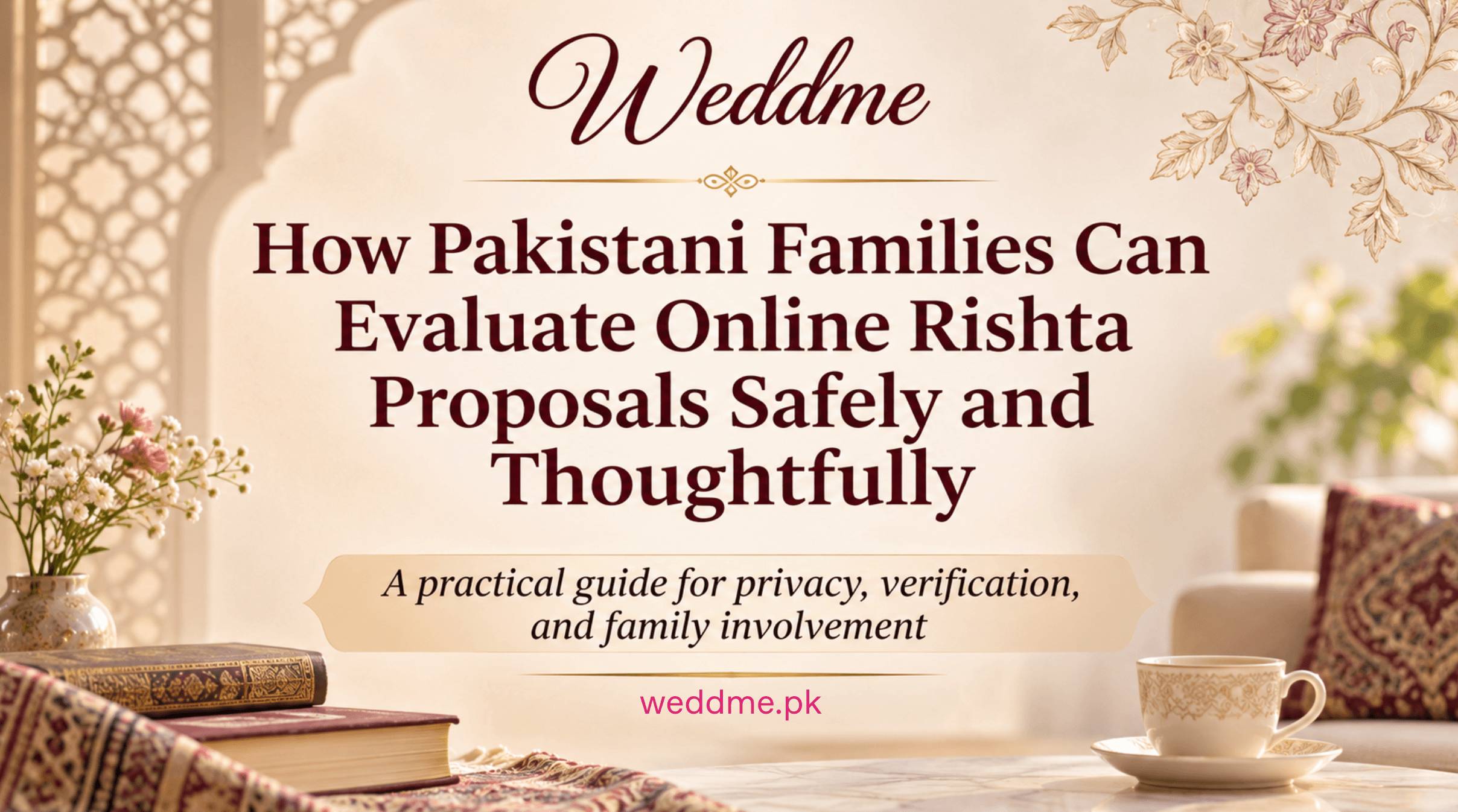
Learn how Pakistani families can evaluate online rishta proposals safely through compatibility checks, privacy, respectful verification and family involvement.
Finding a suitable marriage proposal in Pakistan has always involved more than exchanging biodata. Families consider values, expectations, financial circumstances and the willingness of two people to build a life together. What has changed is where the search begins. Introductions that once came primarily through relatives, neighbours or marriage bureaus can now begin through digital matrimonial directories. That wider reach creates opportunity, but it also makes careful judgment more important.
For related updates, explore Jobs, Scholarships, Government Schemes and Admissions for more information.
A profile may tell a family where someone lives, what they studied and what they do for work. It cannot, on its own, establish character, confirm identity or show how a prospective couple will handle disagreements. The practical challenge is to use technology for discovery without treating it as a substitute for meaningful conversation and independent checks.
Why Family Involvement Still Matters
Online searching does not necessarily mean families have stepped aside. A 2026 study of profiles on Weddme, a Pakistani matrimonial platform, reported that 51.7% of women’s profiles with available manager information were family-managed. The report on family participation in digital matrimony describes activity on one platform, not a nationally representative picture of Pakistan. Even with that limitation, it offers a useful reminder: digital tools and family participation can coexist.
Family members can help ask practical questions and notice inconsistencies, especially when both households want an introduction to move forward. Their role should support, rather than replace, the informed and voluntary decisions of the prospective bride and groom. A sensible process gives both individuals time to understand each other’s expectations without unnecessary pressure.
Start with Compatibility, Not an Impressive Profile
Education, profession and location are reasonable starting points, but they rarely settle the most important questions. Couples should discuss where they intend to live, whether either person expects to relocate, career plans, household responsibilities, financial habits and the degree of involvement expected from extended family. Attitudes toward children, religious practice and conflict resolution may matter just as much.
Families can make these conversations easier by separating essential requirements from preferences. An essential might be agreement about relocation or employment after marriage; a preference might be a particular university or neighbourhood. Without that distinction, a search can become an endless comparison of credentials rather than a serious assessment of whether two lives are compatible.
Use Digital Directories as a Starting Point
A useful online search allows families to narrow options by city, age, education, profession and marital status without disclosing personal details to every stranger. For example, a directory for online rishta search in Pakistan shows how matrimonial profiles can be organised around the questions families commonly ask first. Such filters are helpful for creating a shortlist, but they should never be mistaken for proof that the information in a profile is accurate.
It is also worth asking who can see photographs, contact information and messages. Good privacy controls give people room to assess a proposal before moving a conversation to a personal phone number or arranging a meeting. If a website makes personal information public by default, families should think carefully about what they upload.
Verify Claims Respectfully and Independently
Once both sides express serious interest, verification should become more deliberate. Confirm basic identity and marital status, discuss family contacts, and check education or professional claims using appropriate independent sources. A workplace title, polished photograph or social media presence is not sufficient evidence by itself. Documents should be requested only when relevant and at a suitable stage, and sensitive copies should not circulate unnecessarily.
Warning signs include repeated contradictions, pressure for quick commitment, reluctance to answer ordinary questions, requests for money, and insistence on moving communication to an untraceable channel immediately. None of these signs alone proves misconduct, but they justify slowing down and seeking clarification. When a concern remains unresolved, walking away is a reasonable decision.
Make the First Conversation Meaningful
A first meeting is not an interview to be won. Both people should have a genuine opportunity to ask questions, express boundaries and disagree without embarrassment. Open-ended questions often reveal more than yes-or-no answers: What would a normal working day look like after marriage? How would a major expense be decided? How should a disagreement between spouses and relatives be handled?
Where families arrange an in-person meeting, choose a safe, appropriate setting and make sure everyone knows the plan. Avoid exchanging financial information, passwords or intimate photographs. Most importantly, neither family should interpret an introductory conversation as an obligation to proceed.
A Better Process Is Careful, Not Necessarily Faster
Technology can reduce the limits of geography and personal networks, especially for Pakistanis living away from their hometowns or abroad. Yet successful decision-making still depends on honesty, respectful communication and independent judgment. Families benefit most when online tools help them find relevant introductions, while the people considering marriage remain free to decide whether the match is genuinely right for them.
Conclusion
Review the official sources, dates and eligibility conditions mentioned in this article before taking action. For more related updates, explore the category links above.
FAQs
What is this article about?
Learn how Pakistani families can evaluate online rishta proposals safely through compatibility checks, privacy, respectful verification and family involvement.
What topics are covered in this article?
This guide covers: Why Family Involvement Still Matters, Start with Compatibility, Not an Impressive Profile, Use Digital Directories as a Starting Point, Verify Claims Respectfully and Independently, Make the First Conversation Meaningful.
What should applicants check before applying?
Applicants should check eligibility, required documents, the closing date and the official application channel before submitting any information.
When was this article last updated?
This article was last updated on 2 November, 2026. Always verify deadline-sensitive information from the official source linked in the article.




Comments (0)
No Comments Found